
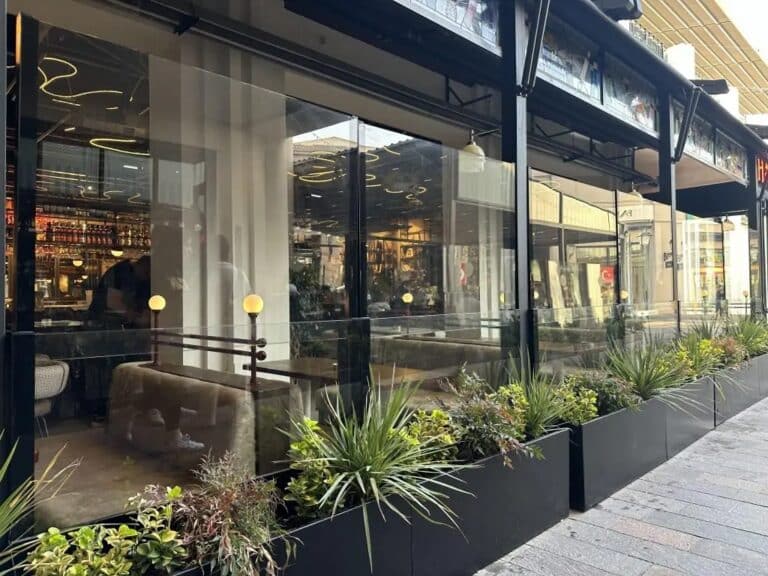
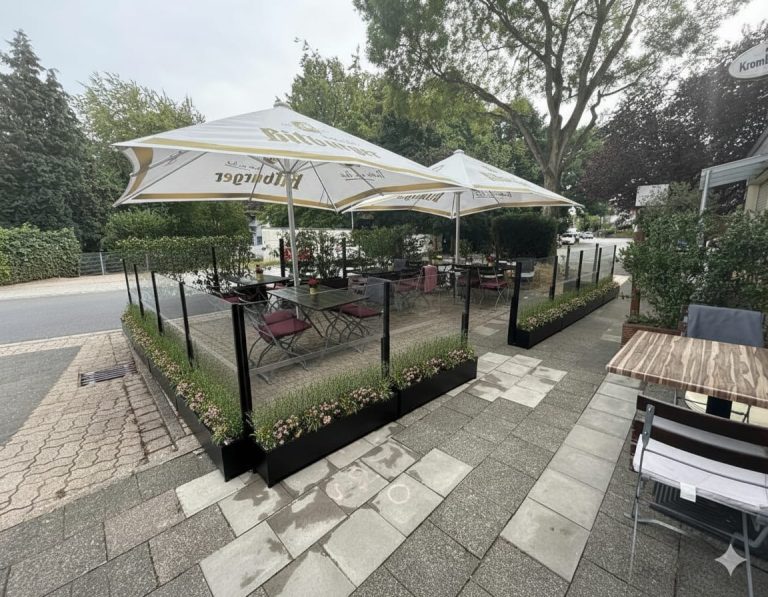
The motorized windbreak glass with integrated planter is an advanced version where the glass panel can be lowered and raised inside the planter stem using an electric mechanism. When there is wind, the panel rises, creating a full-height barrier; when the weather is calm, the panel is concealed within the housing, revealing the view completely. This provides two different layouts in a single product. In automatic closing scenarios... Using anemometer data, the panel position can be adjusted according to the wind..
Motorized Planter Windbreaker Glass Mechanism
The heart of the system is a linear actuator or roller-driven motor located in the rear compartment of the planter stem. The motor moves the carrier slide, which grips the glass panel, along the vertical axis. The slide travels along guide rails inside the stem, ensuring equal support from both edges of the panel.
The glass is not directly connected to the motor. A flexible connecting element is present between them; this element tolerates differences in thermal expansion and small misalignment deviations. Brush seals are used in the guides to prevent the glass from rubbing against the metal during movement.
Control and Monitoring Options
The most common control method is the manual remote control. Multiple units can be grouped with a single remote control, allowing the entire line to operate simultaneously. Wall-mounted switch panels are preferred in businesses as they prevent personnel from searching for the remote control. In projects that want to connect to smart home and building automation, integration is done via dry contact output.
Sensor Integration
The real value of a motorized system lies in its ability to respond automatically. A wind sensor automatically raises the panels when a set speed threshold is exceeded. A rain sensor performs the same function at the onset of rainfall. Systems in night mode lower the panels at closing time, providing both safety and visual simplicity.

Electrical Infrastructure
The motors typically operate on 24-volt direct current. This is a significant choice for outdoor safety. The transformer must be housed in a waterproof enclosure and elevated from the ground. Cable routing is done inside the enclosure; exposed cables pose both aesthetic and safety concerns. Quick-connect waterproof connectors are used for inter-module connections.
A manual emergency lowering lever should be included in case of a power outage. This lever disables the motor, allowing the panel to be lowered manually, and is critical in stormy weather.
Advantages of Motorized Planter Windbreaker Glass

Points to Consider
Motorized systems require regular maintenance because they contain moving parts. Accumulation of dust and sand on the guide rails puts strain on the motor and increases current draw. The rails should be cleaned and the seals checked every six months.
The second point is that there should be no obstructions in front of the panel's movement area. If a table, chair, or flowerpot protrudes into the panel's output path, the mechanism will be strained. Motors with jamming detection features will stop automatically in this case; this feature should be inquired about during purchase.
The third point is the investment cost. Motorized units require a higher budget than manual and wheeled models. However, this offsets the difference in high-traffic operations because they reduce staff workload and extend the lifespan of the equipment.
Motorized Planter Windbreaker Glass Installation
Installation of motorized units is a step further than manual models. First, the housings are positioned and leveled, then the electrical infrastructure is installed, and finally, the glass panels are attached to the rails. Leveling is critical here: even a half-degree tilt can cause the panel to rub against the guide rail and shorten the motor's lifespan.
The cable route should be determined during the project phase. If the cables are to be routed underground, the trenching work must be completed before installation. Cables laid above ground afterwards will be visible and pose a tripping hazard for pedestrians. The control panel should be located in a place with easy service access and protected from direct rain.
During commissioning, the opening and closing limits of each unit are individually set. If a group control system is to be used, the receivers are paired and a scenario test is performed. Prior to delivery, jam detection, emergency manual lowering, and sensor response must be tested together.
In which projects should it be preferred?
Seaside restaurants with prominent views, hotel pool bars, panoramic terraces, and high-rise building gardens are the areas that benefit most from motorized solutions. In these locations, wind patterns change rapidly throughout the day, and manual intervention is impractical. You can review the relevant system page: wheeled models.
Complementary Systems
Motorized barriers are often not used alone. You can review the relevant system pages: automatic pergola awning systems, automatic glass roof systems. You can review the relevant system page: windbreak glass systems. To share your measurements and receive modulation suggestions: communication.
Brief Assessment
The motorized windbreak glass with integrated planter is the most advanced version, where the panel can be lowered and raised within the frame. When used with wind and rain sensors, it operates without human intervention; it provides maximum benefit in coastal businesses where the view is prominent.
When making an investment decision, it is also important to consider that motorized windbreak glass units with planters reduce the workload for personnel. In high-traffic areas, a motorized windbreak glass solution with planters completely eliminates the need for manual handling.




 Türkçe
 English
 Français
 Deutsch
 العربية
 Español
 فارسی
فارسی Afrikaans
 Italiano
 日本語
日本語 Bahasa Indonesia
 简体中文
简体中文 Українська
 Svenska
 Shqip
Shqip Русский
 Português
 Română
 한국어
한국어 Azərbaycan dili
 Polski
 Български
 Српски језик