
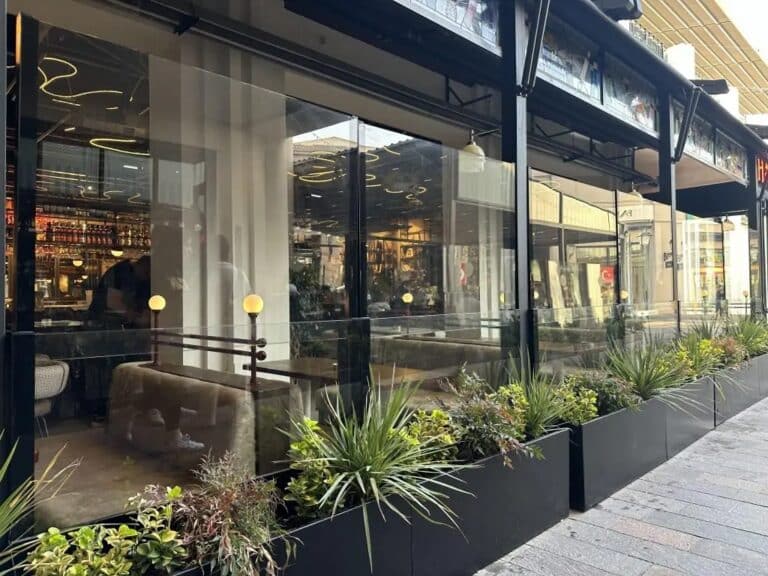
Planter-style windbreak glass is a modular barrier system that protects outdoor seating areas from the wind while also serving a landscaping function. It features an aluminum planter base at the bottom where a plant can be planted, and a tempered glass panel at the top. This dual structure provides both protection and decoration in a single product.
What Is a Planter Glass Windbreak?
The system consists of freestanding modules that are not fixed to the ground or can be fixed optionally. Each module stands on its own weight; soil and plants placed in the pot section also increase this weight. Thus, a windbreak can be installed outdoors without drilling, doweling, or permanent renovations. This is the most practical solution for rental businesses and areas with licensing restrictions.
Unlike classic windbreaks, it doesn't obstruct the view. The glass panel leaves the view and shop window open, while the planter section conceals the tree trunk. For this reason, windbreak glass with a planter section is particularly preferred by businesses located on main streets.
Components of a Planter Windbreak Glass System
Aluminum planter stem
It is manufactured from electrostatically powder-coated aluminum profiles. It has drainage holes and a water discharge channel inside, preventing water from accumulating on the ground after irrigation. The body height generally varies between 40-60 cm.
Tempered glass panel
8 mm or 10 mm tempered glass is used. Tempered glass is essential in high-traffic areas because, when broken, it shatters into small pieces without forming sharp fragments.
Carrier profile and wheel
The U-profile that holds the glass is bolted to the planter body. In wheeled models, the module can be moved by one person thanks to the braked wheels; in fixed models, a footplate is used.

Where is it used?
The most common usage scenarios include separating table areas from street traffic on cafe and restaurant terraces, protecting sun lounger areas by hotel pools, creating meeting areas in office gardens, and reducing wind penetration on residential balconies. You can review the relevant system page: Garden enclosure systems for cafes, restaurants, and hotels..
Advantages of Planter Glass Wind Screens

Things to Consider When Making a Choice
Frequently Asked Questions
Will a glass windbreaker with a potted plant completely block the wind?
By directing the wind flow along the panel's height, it significantly reduces the perceived speed. You can review the relevant system page: windbreak glass systems.
Can it be used during the winter months as well?
Yes. It can be used year-round by rotating the plants; if you prefer, you can leave the pot section empty and fill it with gravel for weight.
Is it difficult to maintain?
The glass surface should be wiped with normal glass cleaner, and the aluminum body should be cleaned with a damp cloth. The bolt tightness should be checked once a year.
Installation Process of Windbreak Glass for Potted Plants
The process begins with measuring the area. The terrace boundary, pedestrian crossing width, and emergency exit axis are determined; if there are municipal sidewalk usage limits, the modulation is designed accordingly. Then, the width of each module is calculated. Standard module widths range from 100-150 cm, and 90-degree connecting pieces are used at corner turns.
In the second stage, the planter stems are placed and leveled. If the ground is sloped, the level difference is corrected with adjustable feet. The glass panels are installed last; this eliminates the risk of glass damage during transport. A terrace application consisting of an average of 12 modules can be completed in half a day by a team of two.
After installation, drainage gravel is placed in the pot, followed by soil and the plant. Wind-resistant species such as ivy, boxwood, and lavender should be preferred. Tall plants are not recommended as they will create a sail effect on the glass.
Lifespan and Durability
A properly manufactured windbreak glass unit with a potted plant will not rust thanks to its aluminum frame and will offer a service life exceeding ten years. Apart from possible scratches on the glass, no wear and tear will be observed. In applications near the sea, rinsing with fresh water once a year will prevent salt accumulation from damaging the paint surface.
The system's greatest economic advantage is that it makes the business's outdoor capacity available for a longer period of the year. Table occupancy rates increase significantly during spring and autumn months on a terrace where the wind is blocked. You can review the relevant system page: automatic terrace enclosure systems.
A Solution Suitable for Your Project
The dimensions, panel height, and planter depth vary according to the project. If you share a sketch of your application area, we can determine the appropriate modulation together. You can review the relevant system page: windbreak glass systems. For current price ranges: to our price lists. To share your measurements and receive modulation suggestions: communication.
Brief Assessment
In summary, potted windbreak glass is a reversible solution for businesses seeking both protection and landscaping functionality in their outdoor spaces. Its strongest points are that it doesn't require permanent ground intervention, it's modularly expandable, and easy to maintain. Once your site's wind load and usage routine are clear, the correct frame and glass combination can be easily determined.




 Türkçe
 English
 Français
 Deutsch
 العربية
 Español
 فارسی
فارسی Afrikaans
 Italiano
 日本語
日本語 Bahasa Indonesia
 简体中文
简体中文 Українська
 Svenska
 Shqip
Shqip Русский
 Português
 Română
 한국어
한국어 Azərbaycan dili
 Polski
 Български
 Српски језик